
Our Latest Articles

How to Improve Essays with Proven Editing Techniques
Feeling stuck with essay drafts that never seem to capture your full idea? Many undergraduate students face challenges turning a basic thesis and scattered notes into a clear, convincing argument. The journey from first draft to polished academic work depends on mastering structure, powerful evidence, and flawless citations. By focusing on a strong thesis, logical organization, effective argumentation and AI-powered clarity, you can build essays that earn recognition in universities across the United States, Canada, Europe, and beyond.
Table of Contents
- Step 1: Assess Your Essay’s Structure and Thesis
- Step 2: Strengthen Arguments and Supporting Evidence
- Step 3: Enhance Clarity with AI-Powered Suggestions
- Step 4: Verify Citations and Academic Integrity
- Step 5: Proofread for Grammar and Style Consistency
Quick Summary
| Key Point | Explanation |
|---|---|
| 1. Assess your thesis clarity | Ensure your thesis statement is specific, arguable, and invites engagement for effective essay development. |
| 2. Strengthen argument with evidence | Integrate high-quality sources and provide context to reinforce arguments and connect them to your central thesis. |
| 3. Leverage AI tools for clarity | Use AI writing assistants to enhance the organization of your essay and refine your arguments without losing your unique voice. |
| 4. Verify citations for integrity | Accurately check citations against sources, maintain a consistent style, and ensure all links are functional to uphold academic honesty. |
| 5. Proofread for grammatical accuracy | Conduct thorough proofreading to catch errors, ensure style consistency, and produce a polished academic document. |
Step 1: Assess Your Essay’s Structure and Thesis
Structuring an exceptional essay begins with a rigorous assessment of your core thesis and overall organizational framework. This critical step ensures your academic writing communicates complex ideas with clarity and precision.
Start by examining your thesis statement, which serves as the central argumentative claim of your entire paper. An effective thesis should be specific, arguable, and complex enough to warrant detailed exploration. Effective thesis creation requires understanding that your central claim must provoke thoughtful engagement from readers.
To systematically evaluate your essay’s structure, consider these key elements:
- Clarity of introduction: Does your opening paragraph provide a compelling roadmap?
- Thesis statement strength: Is your main argument nuanced and debatable?
- Logical paragraph sequencing: Do your paragraphs flow coherently and support the central thesis?
- Evidence alignment: Are your supporting arguments directly connected to your core claim?
Strategic essay structuring involves creating a logical progression where each paragraph builds upon the previous one, ultimately reinforcing your primary argument. Your goal is constructing a persuasive intellectual journey that guides readers through your analytical reasoning.
Pro tip: Create a reverse outline after drafting your initial essay to objectively assess how well each paragraph supports your central thesis.
Step 2: Strengthen Arguments and Supporting Evidence
Crafting a compelling academic essay requires more than just presenting ideas—you need to build robust arguments supported by credible evidence. This step focuses on transforming your initial draft into a persuasive piece of scholarly writing that demonstrates critical thinking and analytical depth.
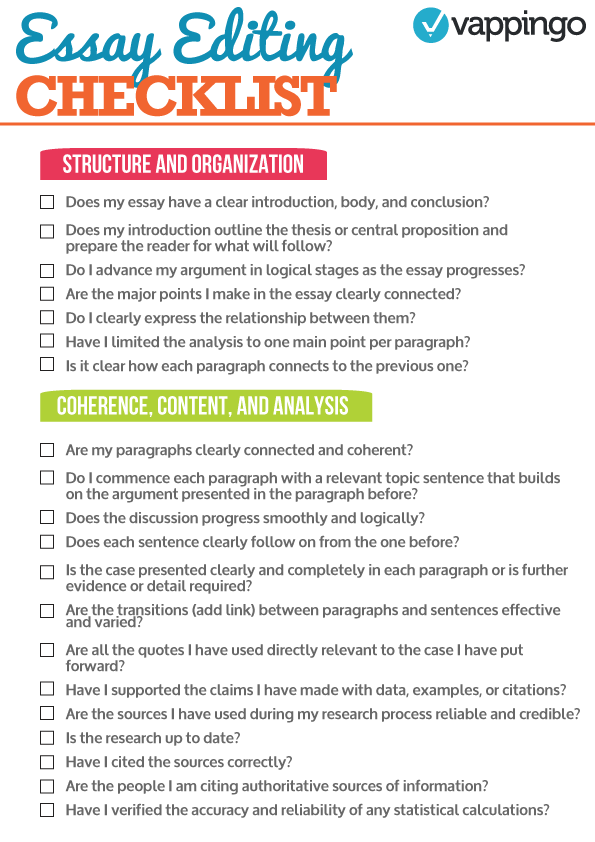
Effective argumentative writing demands strategic evidence integration that goes beyond simply listing facts. Your goal is to construct a logical narrative where each piece of evidence directly supports and illuminates your central thesis.
Key strategies for strengthening your arguments include:
- Identify high-quality sources: Academic journals, peer-reviewed publications, and expert research
- Evaluate evidence credibility: Assess the reliability and relevance of each source
- Provide context: Explain how each piece of evidence connects to your argument
- Anticipate counterarguments: Acknowledge potential opposing viewpoints
- Analyze evidence critically: Don’t just quote sources—interpret and explain their significance
When integrating evidence, focus on creating a clear connection between your claims and supporting materials. Strategic source integration involves not just presenting data but demonstrating how that data reinforces your intellectual argument.
Pro tip: Always include a sentence explaining how each piece of evidence directly supports your thesis, transforming mere facts into a compelling narrative.
Step 3: Enhance Clarity with AI-Powered Suggestions
Taking your essay to the next level requires leveraging cutting-edge technological tools that can transform your writing from good to exceptional. AI-powered writing assistants offer unprecedented insights into improving your academic prose, providing nuanced suggestions that sharpen your argument and clarity.
AI essay writing frameworks can analyze your document’s structure, identifying potential weaknesses in logical flow and argumentative coherence. These intelligent systems go beyond simple grammar checks, offering deep analytical support that helps refine your intellectual presentation.
Key strategies for utilizing AI writing tools effectively include:
- Understand tool capabilities: Recognize the specific strengths of different AI platforms
- Review suggestions critically: Don’t accept every recommendation blindly
- Focus on structural improvements: Use AI to enhance argument organization
- Maintain your unique voice: Ensure AI suggestions complement your writing style
- Check academic appropriateness: Verify recommendations meet scholarly standards
AI tools are powerful assistants, not replacements for your critical thinking and academic expertise.
When integrating AI suggestions, pay close attention to how they might improve your argument’s logical progression and overall writing clarity. The goal is not to replace your intellectual work but to refine and polish your existing ideas.
Here’s a summary of common essay weaknesses and how AI-powered tools can address them:
| Essay Weakness | Traditional Revision | AI Tool Support |
|---|---|---|
| Disorganized structure | Manual outlining | Automated flow analysis |
| Repetitive arguments | Careful re-reading | Redundancy detection |
| Ambiguous thesis | Peer review | Clarity enhancement gains |
| Weak evidence links | Rechecking sources | Contextual suggestion prompts |
| Grammar inconsistencies | Proofreading | Automated grammar checks |
Pro tip: Run AI analysis multiple times, comparing suggestions to develop a more nuanced understanding of your writing’s strengths and potential improvements.
Step 4: Verify Citations and Academic Integrity
Maintaining academic integrity is not just a requirement—it’s the cornerstone of scholarly work. Your citations serve as a critical roadmap that demonstrates intellectual honesty and connects your arguments to the broader academic conversation.
Proper citation practices are fundamental to establishing credibility and preventing unintentional academic misconduct. These practices involve more than simply listing sources—they represent a commitment to transparent and ethical scholarship.
Key strategies for ensuring citation accuracy include:
- Cross-check source information: Verify every citation against the original document
- Use consistent citation style: Follow one standard format throughout your essay
- Include full bibliographic details: Provide complete information for each source
- Check direct quote accuracy: Ensure quotations match original text exactly
- Verify digital source links: Confirm all online sources are active and accessible
Academic integrity means giving credit where credit is truly due, not just avoiding plagiarism.
When reviewing your citations, pay special attention to academic citation guidelines that help prevent unintentional errors. Understanding the nuances of proper attribution protects your academic reputation and demonstrates scholarly discipline.
Compare academic citation styles based on key attributes:
| Citation Style | Most Common Areas | Includes URL Links |
|---|---|---|
| APA | Social sciences | Yes (for online sources) |
| MLA | Humanities | Yes (for online sources) |
| Chicago | History, business | Optional for online sources |
| Harvard | Sciences, medicine | Yes (for online sources) |
Pro tip: Create a separate document to track your sources during research, recording full bibliographic information in real-time to simplify final citation verification.
Step 5: Proofread for Grammar and Style Consistency
Transforming your essay from a draft to a polished academic document requires meticulous proofreading. This final refinement stage elevates your writing from good to exceptional by ensuring grammatical precision and stylistic coherence.
Effective proofreading techniques go beyond simple spell-checking, demanding a systematic approach to identifying and correcting subtle writing errors. Your goal is to create a document that reads smoothly and professionally.
Key strategies for comprehensive proofreading include:
- Read backwards: Examine sentences out of context to catch grammatical mistakes
- Use text-to-speech: Listen to your essay to identify awkward phrasing
- Check verb tense consistency: Maintain uniform verb usage throughout
- Eliminate redundant language: Remove unnecessary words and repetitive expressions
- Verify punctuation accuracy: Ensure correct comma, semicolon, and period usage
Proofreading is not just about fixing errors—it’s about refining your academic voice.
Carefully examining grammar and style helps you create a polished and professional document. Attention to detail separates outstanding academic writing from merely acceptable submissions.
Pro tip: Print your essay and proofread using a ruler or blank sheet of paper to isolate each line, forcing your brain to focus on individual sentences rather than skimming.
Elevate Your Essay Writing with Samwell.ai
Struggling to craft a clear thesis statement or organize your arguments logically can drain your confidence and blur your message. This article highlights key challenges like strengthening evidence, verifying citations, and refining clarity—common hurdles in academic writing. Samwell.ai offers an AI-powered solution to these exact problems by providing real-time feedback on structure, citation accuracy, and argument coherence to help you transform drafts into polished essays.
Don’t let essay complexity hold you back. Experience how our advanced platform streamlines your writing process while ensuring academic integrity with tools that support various citation styles including MLA, APA, and Chicago. Visit Samwell.ai now and take control of your essay improvements today. Start writing smarter and submit your best work with confidence.
Frequently Asked Questions
How can I assess my essay’s structure?
Start by evaluating your thesis statement, ensuring it is specific, arguable, and complex enough. Next, review the clarity of your introduction, the logical flow of your paragraphs, and how well your evidence supports your main claim.
What steps can I take to strengthen my arguments and evidence?
To enhance your arguments, identify high-quality sources and ensure each piece of evidence aligns directly with your central thesis. Provide context for your evidence and anticipate potential counterarguments to showcase your critical thinking.
How can AI tools help improve my essay?
AI writing assistants can analyze your essay’s structure and offer suggestions to enhance clarity and argument flow. Use these insights to refine your writing, ensuring that they complement your unique voice and maintain academic integrity.
What should I focus on when verifying citations?
Ensure all citations are accurate by cross-checking source information and following a consistent citation style. Include full bibliographic details and confirm the accuracy of direct quotes to uphold academic integrity.
What proofreading techniques can elevate my essay?
Adopt effective proofreading techniques such as reading your essay backwards to catch grammatical errors and listening to it using text-to-speech for awkward phrasing. Focus on ensuring verb tense consistency and eliminating redundant language for a polished final document.
Recommended

Locksmith for 30 years throughout all Dublin areas.


Quick Links
Home
About Us
Services
Testimonial
Faqs
Legal
Privacy Policy
Terms & Conditions